
Laser-Induced Breakdown Spectroscopy (LIBS)
Laser-Induced Breakdown Spectroscopy (LIBS) is an analytical technique used to determine the elemental composition of materials. It employs a focused, high-energy laser pulse to ablate a small amount of material from the surface of a sample, creating a plasma. This plasma contains excited atoms, ions, and electrons from the ablated material.
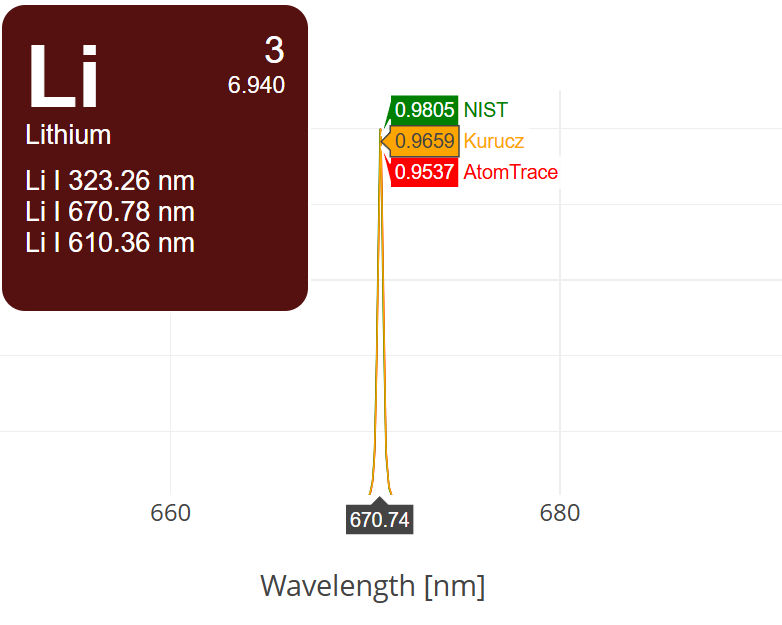
As the plasma cools, the excited species emit light at characteristic wavelengths, specific to the elements present. A spectrometer collects and analyses this emitted light, producing a spectrum that reveals the material’s elemental composition.
For more information
Laser-Induced Breakdown Spectroscopy (LIBS)
Laser-Induced Breakdown Spectroscopy (LIBS) is an analytical technique used to determine the elemental composition of materials. It employs a focused, high-energy laser pulse to ablate a small amount of material from the surface of a sample, creating a plasma. This plasma contains excited atoms, ions, and electrons from the ablated material.
As the plasma cools, the excited species emit light at characteristic wavelengths, specific to the elements present. A spectrometer collects and analyses this emitted light, producing a spectrum that reveals the material’s elemental composition.
Key Features
Key Features of LIBS:
- Broad Applicability: LIBS can analyse solids, liquids, gases, and even aerosols without significant sample preparation.
- Multi-element Detection: It detects virtually all elements in the periodic table simultaneously. It is especially suited to light elements.
- Speed: Results are often obtained within seconds, making LIBS ideal for real-time or on-site analysis.
- Non-destructive (with small sampling): While some material is ablated, the technique minimises overall damage to the sample.
Laser-Induced Breakdown Spectroscopy (LIBS)
Laser-Induced Breakdown Spectroscopy (LIBS) is an analytical technique used to determine the elemental composition of materials. It employs a focused, high-energy laser pulse to ablate a small amount of material from the surface of a sample, creating a plasma. This plasma contains excited atoms, ions, and electrons from the ablated material.
As the plasma cools, the excited species emit light at characteristic wavelengths, specific to the elements present. A spectrometer collects and analyses this emitted light, producing a spectrum that reveals the material’s elemental composition.
Key Features
Key Features of LIBS:
- Broad Applicability: LIBS can analyse solids, liquids, gases, and even aerosols without significant sample preparation.
- Multi-element Detection: It detects virtually all elements in the periodic table simultaneously. It is especially suited to light elements.
- Speed: Results are often obtained within seconds, making LIBS ideal for real-time or on-site analysis.
- Non-destructive (with small sampling): While some material is ablated, the technique minimises overall damage to the sample.


