SPECS

Based in Germany’s capital city, Berlin, SPECS has been established for over 40 years and focussed in the area of surface analytical instrumentation since 1992. The main expertise areas of SPECS are in the fields of electron spectroscopic methods such as XPS, ARPES, UPS, AES and SEM/SAM as well as scanning probe techniques and associated sample preparation tools such as LEED, ion and deposition sources. The SPECS brand includes the leading brands of Nanonis (SPM control systems) and Enviro (Near Ambient / NAP XPS). In 2021 SPECS became part of the LAB14 group which brings together companies with complimentary products including lithography, inkjet printing and ambient SPM (Scanning probe Microscopy). In 2024 SPECS announced a merger with Focus GmbH, adding complimentary products in the field of momentum microscopes, spin filters and e-beam evaporators, as well as specialised electron beam and laser welding equipment.

VSM Instruments’ expertise with the SPECS products is based on a long-standing close relationship since 2008.

Key techniques in the SPECS range include:

  • X-Ray Photoelectron Spectroscopy (XPS)
  • Near-Ambient Photoelectron Spectroscopy (NAP-XPS)
  • Hard X-Ray Photoelectron Spectroscopy (HAXPES)
  • Ultra violet Photoelectron Spectroscopy (UPS)
  • Angle Resolved Photoelectron Spectroscopy (ARPES)
  • Momentum microscopy
  • Variable Temperature Scanning Probe Microscopy (VT-SPM) in ultra high vacuum (UHV) conditions
  • Controllers for Scanning probe microscopes
  • Quantum transport measurements
  • E-beam and laser welding

View Products

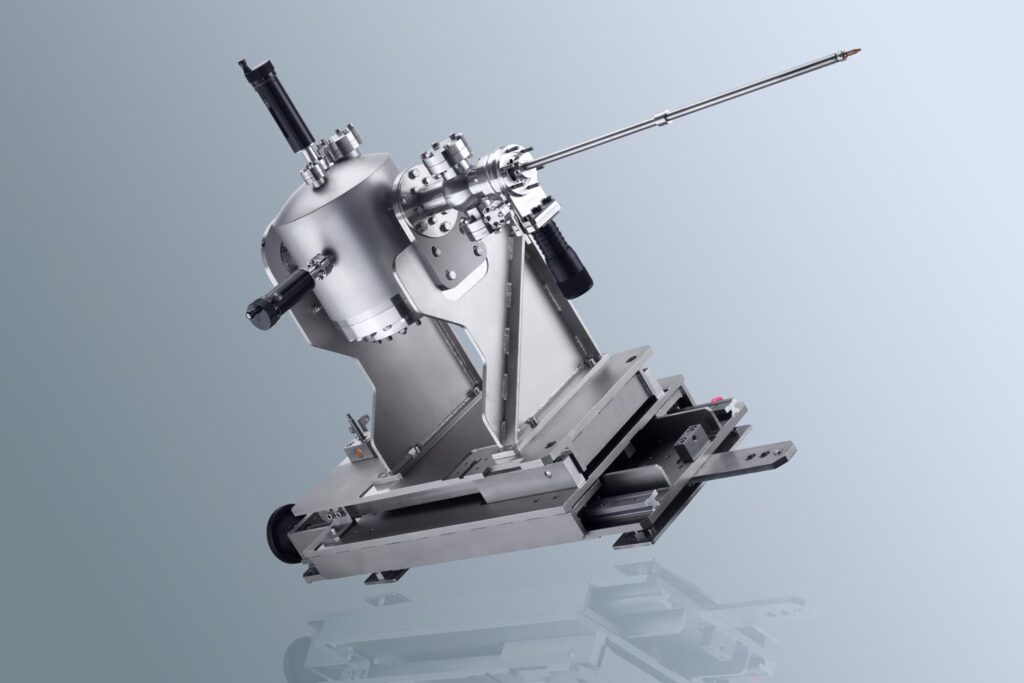
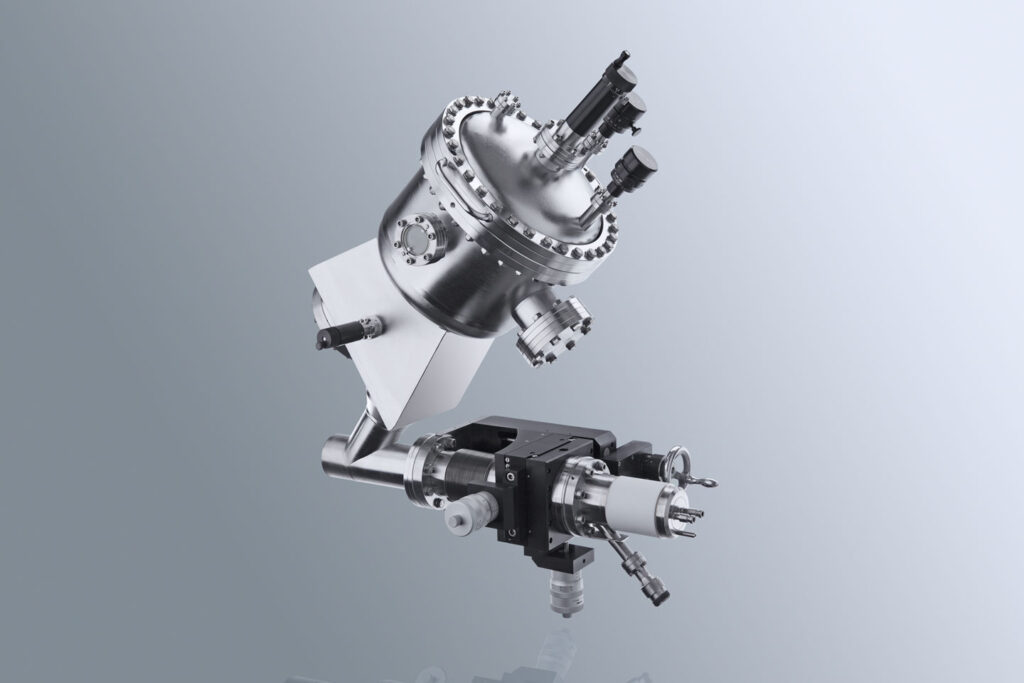
SPECS Transfer tool for SPECS-style flag sample holders

SPECS Transfer tool for SPECS-style flag sample holders

SPECS Transfer tool for SPECS-style flag sample holders

Our range of e-beam evaporators are designed to evaporate low vapour pressure materials. The material is heated in a localised area by an electron beam produced from a filament biased relative to the rod of the desired material or to a crucible containing it. Our smaller sources are typically optimised for highly controlled deposition of very thin layers in the range of a monolayer or a few nm onto smaller flag-style samples. As the sources get larger, material capacity and possible sample size increases accordingly.

Low Energy Electron Diffraction (LEED) is one of the most powerful methods to determine surface structures. Analysis of LEED patterns and intensities provides the size and shape of the surface unit cell, the degree of order and detailed atomic structure with a precision of the order of picometers. Our LEED optics also enable Auger Electron Spectroscopy (AES) when equipped with the appropriate (optional) control unit. AES is a technique to provide chemical analysis of the surface. Our LEED optics are available in two flange sizes, DN100CF and DN150CF. We recommend the largest possible flange size if the chamber allows it, as larger screen sizes much are easier to work with and the cost saving for the smaller optics is minimal.

We have several ion source options in our product range including a simple robust ion source for sample preparation on small (typically flag-style) samples. Our more advanced IQE12 series sources can also be used for sample cleaning but offer focus and raster capability with depth profiling and ISS (Ion Scattering Spectroscopy) or SIMS (Secondary Ion Mass Spectroscopy) applications in mind (an optional Wien mass filter is available for the latter two applications). A version of IQE12 is available for applications where a beam of low energy ions is needed for charge neutralisation. The sources are based on extractor technology with a yttrium oxide coated iridium filament making them suitable for both reactive and inert gases.

Newly-released in spring 2026, the 6th generation of the Nanonis control system builds the established pedigree of the Nanonis BP5e which has been the go-to solution for SPM control for the last 10 years. In total over 1600 Nanonis systems have been delivered to the research community since the Nanonis range was first launched over 20 years ago, serving as the technical foundation for countless scientific breakthroughs and high-impact publications. The Mimea 6th generations combines exceptional signal quality, high speed and a flexible, powerful and user-friendly software interface. The new controller builds on the exceptional performance and signal quality of the BP5 and offers 3 × reduction in broadband noise and a 8 × higher effective resolution compared to the previous generation, as well as a 7x higher data transfer rate.

The oscillation controller (OC6) adds dynamic and multifrequency AFM capabilities to the Nanonis controller. With 5x the input bandwidth of the previous generation OC4 unit, the controller can handle signals from DC to 25 MHz or even 100MHz with the highest accuracy. The redesigned output signal path offers improved linearity, signal purity, and fully digital amplitude control. With user-selectable ranges and filters to reduce broadband noise and optimise signal quality for the application, it offers uncompromised performance also for signals down to DC. The high-current output stage can be bypassed for applications not requiring large driving currents, lowering noise to less than 5 nV/sqrt(Hz).

The HVA4 family is a set of high voltage amplifiers designed for nano-positioning applications using piezo elements. Three different models with maximum output voltages of ±140 V, ±220 V or ±400 V let the user choose an optimal setup for the required application. The unit has six channels featuring four inputs (X, Y, Z and AUX) divided into three groups (X&Y, Z, AUX). Each group has its individual gain selector with 4 settings. Z and AUX inputs additionally have switchable polarities.

Provides all the required supply voltages for the Nanonis HVA4 and PMD4. Up to two of these instruments can be connected to a single HVS4.

The Nanonis PMD4 piezo driver was specifically designed with low-temperature applications in mind, where slip-stick motors require very fast slip-transitions. The patented electronics of the PMD4 can provide waveforms with up to ±400V and deliver peak currents above 20 A. This results in fast transitions taking significantly less than 1 μs even at peak voltage into a real load. The very sharp transitions and high voltages also allow for simpler piezo stacks resulting in more rugged mechanical designs. The PMD4 can drive loads up to 3 μF.

Nanonis adaptation kits exist for many commercially available UHV SPMs including those from SPECS themselves, as well as Omicron, RHK, JEOL, Unisoku and Bruker.

The original microscope cables connect directly to the pin-compatible interface, which makes it extremely simple to connect the control system to the microscope. The adaptation kit powers both STM and AFM pre-amplifiers and switches current and bias gains. In the case of beam deflection AFM models, the laser diode is monitored directly by the Nanonis software and the beam-deflection module displays the signals from the photo-detector. Control of inertial motors (x, y, z, mirrors and PSD) for coarse motion as well as automatic approach is seamlessly integrated in the Nanonis software and requires the Nanonis Piezo Motor Driver (PMD4).

The power of lego blocks: Build a fully customized experiment in LabVIEW or any other programming language

Script your own high-speed measurement sequences on the real-time system with scripting module SI 5. When speed and precise timing matter, measurement routines just can’t be fast enough. With a time-deterministic approach and 50 μs time interval between commands, scripting significantly boosts execution speed and reduces measurement time. The module is seamlessly integrated in standard measurement modules: Scripts can be easily called from other modules, and custom functions or pre-defined measurement can be started from within a script. The scripting module is not intended as a replacement of the Nanonis Programming Interface, but as complementary module: It allows 100x faster execution speed while the Programming Interface offers more flexibility.

The atom tracking module is designed to track topographical features (not only atoms) dynamically and can therefore measure and compensate for thermal drift and sample tilt. A fully automated procedure automatically calculates drift velocity and sample tilt in both X and Y-directions as well as drift in Z-direction and compensates for these. This module is of particular interest when the tip position has to follow a local extremum (e.g. an atom or molecule, maximum or minimum) between point-spectroscopy or when scanning a small scan area where drift is highly noticeable.

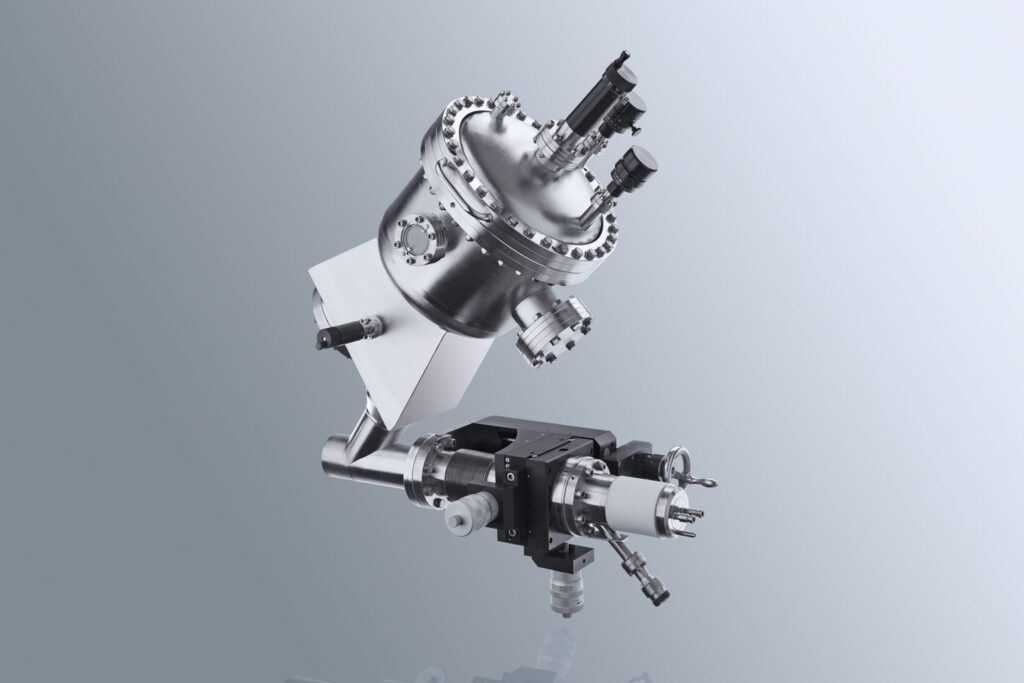
The SPM Aarhus 150 is an outstandingly stable and time saving instrument. A specially-designed variable temperature scanner platform of 3 kg mass with integrated low noise liquid nitrogen (LN2) cooling device guarantees the uncompromised superior SPM performance. Special care was taken to decouple the flow cooler from the sample stage and yet ensure permanent cooling connection between them. For this dedicated flexible copper braids are used to couple the extra heavy scanner platform to the flow cryostat without affecting excellent stability of the SPM Aarhus. A tight mechanical and thermal contact between sample holder and SPM stage allows for the extremely accurate sample temperature control and stability. A typical cool down times of less than 60 min to the temperatures below 130K are achieved. A typical time span of 20 min from insertion of a sample at room temperature to “ready for SPM” at below 130 K and has been shown. For temperature ramps counter heating of the sample is possible even to elevated temperatures up to 400 K. A comparably low LN2 consumption can be realized in operation as well as during the fast cool down of the cryostat from room temperature. About 20 l of LN2 is consumed during initial cool down while the typical LN2 consumption during operation at 130 K is about 10 litres per hour. Through the unification of the SPM mechanics into one STM/AFM unit, the SPM Aarhus 150 can easily be upgraded to AFM by using the KolibriSensor™. Our SPECS scanning probe microscope SPM Aarhus 150 sets a new standard by showing the highest thermal stability at variable temperatures between 90 and 400K without compromising its original mechanical stability. A direct in-situ optical access allows for the sample illumination and investigation of light induced processes. Additionally an evaporation port permits in-situ deposition on the sample surface and investigation of the growth processes during scanning.

Investigations of catalytic reactions on the surfaces and the attempt to bridge the pressure and material gap between UHV and “real world” applications require an ultra-stable and reliable SPM able to operate in extreme conditions. Once again, the stability and simplicity of the SPM Aarhus design allowes for the extension of the applications in the pressure range between UHV and 100 mbar by developing special near ambient pressure (NAP) design. For this SPM Aarhus head is mounted in side of an in-situ reactor cell made of inert materials (or coated with non-reactive material). By doing so, only the inside of a little reactor cell is flooded with the gas. Easy and fast on-site switch between UHV and near ambient pressure applications is possible by opening a lid on top of the reactor cell. A halogen lamp heater for high temperature applications is mounted directly on the lid allowing all kinds of samples to be imaged at temperatures exceeding 850 K in UHV and 550K at 10 mbar. In-situ tip/sensor preparation by ion sputtering is still feasible when the lid of the reactor is open. A direct in-situ optical access to the sample during measurements at near ambient pressures can be used for investigation of photo catalytic reactions. Both STM tips as well as the KolibriSensor™ can be used with the system without any compromises on its stability.

The ProvenX-ARPES system is a dedicated small spot ARPES analysis tool, supporting the new ASTRAIOS 190 electron analyser with single spot shifting lens, parallel single event detectors and optional 3D spin detection, as well as the UVS µFOCAL small spot UV source with optional monochromator. The sample handling is done by the SPECS Ganymed low temperature manipulator series. The system comes with a dedicated preparation chamber, a clean UHV sample storage facility and a multi sample fast entry loadlock.

System control is done by the SpecsLab Prodigy software suite with integrated remote control packages, automated sample handling and a computer based vacuum control system.

The system can be equipped with an optional small spot x-ray source for material characterization, electron sources and charge neutralization sources. Additional software and preparation tools are available.

The ProvenX-MM system is a specialized system base for momentum microscopy solutions, supporting the KREIOS 150 Series, parallel single event detectors and optional spin detection, as well as the UVS µFOCAL small spot UV source with optional monochromator. The sample handling is done by the SPECS HESTIA low temperature microscopy stage. The system comes with a dedicated preparation chamber, a clean UHV sample storage facility and a multi sample fast entry loadlock.

System control is done by the SpecsLab Prodigy software suite with integrated remote control packages, automated sample handling and a computer based vacuum control system.

The system can be equipped with an optional small spot x-ray source for material characterisation. Additional software and preparation tools are available.

The ASTRAIOS 190 is a revolutionary ARPES analyser for 2D momentum mapping. It is based on a direct k-mapping single spot shifting lens with a virtual entrance slit for ultimate k- and energy resolved measurements.


The KREIOS 150 S is a new generation of electron spectrometers for high performance ARPES and PEEM. The unique lens system combines an immersion lens for PEEM operation with a hemispherical energy analyser scanning system for unrivaled ARPES measurements. Its lens system acquires the full half sphere of the electron emission for ultimate angular acceptance of 180°.

The KREIOS 150 S displays energy vs k-vector or energy vs spatial information directly on the detector. With the scanning lens it is possible to measure a full 3D dataset for ARPES or energy filtered PEEM. The lens system features apertures to refine the k-space into high contrast and dark field PEEM, as well as field apertures to select a spatial region for µ-ARPES down to 2 µm field of view. The kinetic energy up to 1500 eV allows XPS and XPEEM measurements. With the new CMOS detector, the KREIOS 150 S is the most performing ARPES analyser available.

The KREIOS 150 MM is a new generation of electron spectrometers for high performance ARPES and PEEM. The unique lens systems combines and immersion lens for PEEM operation with a hemispherical energy analyser scanning system for unrivaled ARPES measurements. Its lens system acquired the fill half sphere of the electron emission for ultimate angular acceptance of 180°.

The KREIOS 150 MM comes with a special lens system for momentum microscopy, showing a constant energy map or a real space map on the detector. Integrated deflectors allow changing the microscopy spot without moving the sample. The lens system features apertures to refine the k-space into high contrast and dark field PEEM, as well as field apertures to select a spatial region for µ-ARPES down to 2 µm field of view. The kinetic energy up to 1500 eV allows XPS and XPEEM measurements. With the new CMOS detector the KREIOS 150 is the most performing ARPES analyser available. Due to the design of the KREIOS lens system and hemisphere, no artificial aberration correction is needed. Instead a second hemisphere can be upgraded to enhance the energy resolution or the electron transmission.

The METIS 1000 is the next generation TOF spectrometer for ARPES and momentum microscopy. If a pulsed light source is available, the METIS 1000 is the intrument of choice. It allows aquisition of two in plane k-vectors against the kinetic electron energy in one shot. The lens system is optimised for high momentum resolution and acquired electrons from the complete half space above the sample, yielding ultimate acceptance angles. The lens design directly shows the k-space on the detector, hence, no conversion from angular space into real space is needed. Integrated deflectors in the microscopy lens allow to move the area of interest without moving the sample and integrated apertures can be used for µ-ARPES or contracst enhancement in PEEM. The native repetition rate of the detector is 5-8 MHz. With a special frequency splitter is is possible to boost the acceptable repetition rate up to 100 MHz.

For many years, the Phoibos-series analysers have formed the cornerstone of the SPECS analyser product range and as such are well proven in the field. Depending on configuration, the Phoibos series can be adapted for XPS, UPS, ARPES, HAXPES, NAP XPS or ISS. It comes in three possible hemisphere sizes: 100, 150 and 225mm and a range of 1D and 2D detectors including 1D and 2D delayline, 2D-CCD and AD-CMOS. Acceptance angles of +/-15º are standard.
The µSIRIUS is a new generation of duo-plasmatron based discharge light sources. Its body fully manufactured by additive manufacturing increases the stability and performance compared to the existing UV light sources. The imprinted water cooling reduces the dimensions of the source and allows us to improve the anode geometry. The photon flux density can be increased by an order of magnitude compared to the existing solutions. A new type of filament comes with a significantly increased life time of > 5000 hours.

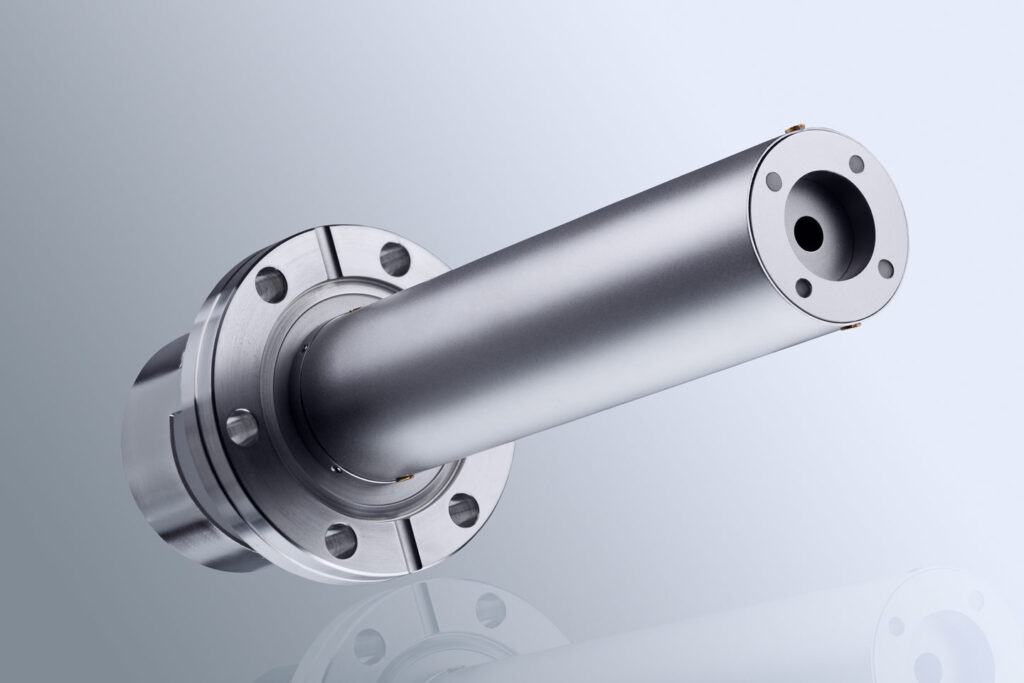
The µFOCAL capillary is a true focusing capillary. Due to the duo-plasmatron principle, the UV source generates a tiny emission spot, which can be focused on the surface without any artificial apertures. The new capillary design reduces the spot size down to 100 µm with no loss in the photon flux. Hence the flux density on the sample surface can be increased by one order of magnitude.

The TMM 304 is a high flux VUV monochromator optimised for use with the µSIRIUS UV source. It features exchangeable gratings for various emission lines such as He I, He II or Xe. The design of the VUV monochromator produces light with a high intrinsic degree of linear polarized light. A rotatable frame allows a change from s to p polarization without breaking the vacuum. An optional polariser cassette is available to increase the degree of polarisation. The efficient pumping system results in extremely low operational pressures in the analysis system

The SPECS UVS 10/35 is an easy to use and robust UV source. It provides an excellent He I to He II ratio and can be operated with many different gases. The source is designed for longest operation time with extreme stability and easy ignition.

The UV source fits almost any vacuum chamber on a free DN40CF flange, while the sample to flange distance is not critical. An optional polariser is available to polarise the normally unpolarised light.

This novel and smart analysis tool overcomes the barriers of standard XPS systems by enabling analyses at pressures far above UHV. EnviroESCA is designed from the ground up for high-throughput analysis and opens up new applications in the fields of medical technology, biotechnology and the life sciences.

It offers the shortest loading-to-measurement time on samples of all types including liquids, tissue, plastics and foils, powders, soil, zeolites, rocks, minerals and ceramics

The SPECS ProvenX NAP is available with backfilling configuration or with In-Situ Cell (DeviSIM, like a small compact reactor). It is a performance optimised system for state of the art NAP-XPS as well as NAP-UPS measurements from UHV up to 30 mbar pressure range. It contains a PHOIBOS 150 NAP analyser with unsurpassed transmission and angular acceptance, a high performance small spot monochromatic X-ray source µ-FOCUS 600 NAP, a 4-axes manipulator or DeviSIM with NAP different heating capabilities as well as an optional non-monochromatic UV source UVS 300 NAP.

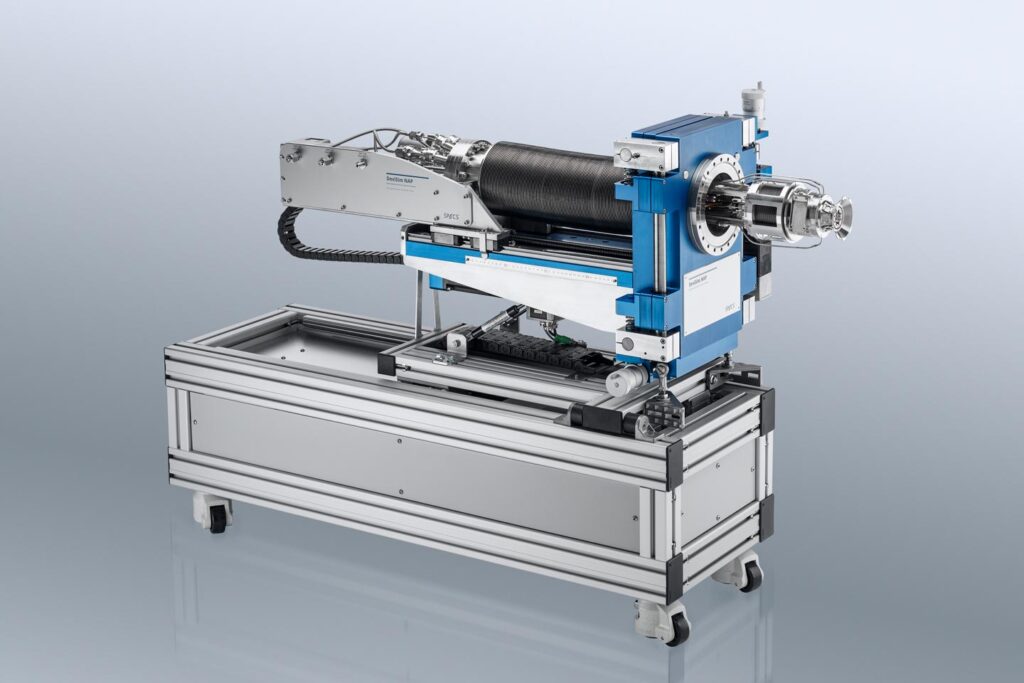
Highest transmission wide angle hemispherical energy analyser with 60° acceptance angle, and AD-CMOS detector for photo electron spectroscopy measurements (XPS and UPS) and angular resolved studies (ARXPS) in the pressure regime from UHV to near ambient pressure (NAP upgradable). With this analyser NAP-HAXPES measurements up to 10 keV can be performed.

EnviroMETROS is a unique metrology platform for the chemical analysis of ultrathin films and 2D materials that allows a detailed characterisation of stoichiometries‚ composition and depth distribution of elements. The system combines XPS with an array of optional techniques such as HAXPES, UPS, IPES, AES, REELS, Raman and Infrared spectroscopies. These techniques can be employed on the same sample spot. It can optionally be configured for NAP XPS, but the base model is a UHV load-locked system. Depending on the system configuration, it can be set up for 80x80mm samples or 8″ or 12″ wafers.


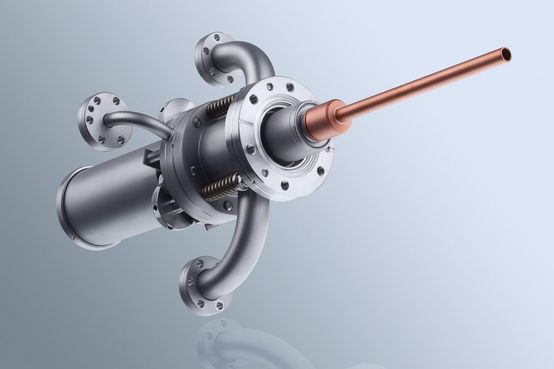
The small spot monochromator µ-FOCUS 500/600 NAP is developed for XPS measurements in near ambient pressure regime. The X-ray monochromator operates according to Bragg’s Law of X-ray diffraction. A single wavelength of X-rays is reflected from a quartz single crystal mirror at a specific angle of reflection. The mirror has a 500 mm Rowland circle diameter for µ-FOCUS 500  NAP and 600 mm for µ-FOCUS 600 NAP, respectively. Due to its overall compactness, the µ-FOCUS 500/600 NAP is suitable for mounting on almost any analysis chambers as a bolt-on component. By using the differentially pumped NAP extension with Si3Nwindow, XPS measurements under gas atmospheres of up to 30 mbar can be carried out.

DeviSim NAP is a reactor cell of 400 ml volume at near ambient pressure conditions that can directly be coupled to the PHOIBOS 150 NAP. It is built on a manipulator which is docked into the UHV analysis chamber with PHOIBOS 150 NAP analyser. It designed for a fast sample transfer. The cell includes a gas inlet system suitable for a wide range of gases. The sample heating mechanism allows for heating up to 600 °C at 20 mbar of N2 pressure and cooling with liquid Nitrogen down to at least 200 K and a gas handling system.

The µFOCUS 500/600 monchromator is equipped with microfocus high performance X-ray source XR 50 MF which is specially designed for the use with the monochromator. This small spot source is equipped with Al anode. The small spot monochromator µFOCUS 500/600 operates according to Bragg´s Law of X-ray diffraction. A single wavelength of X-rays is reflected from a quartz single crystal mirror at a specific angle of reflection. A moveable aluminised polymer window (shutter) is provided on the monochromator housing for differential pumping or to shield the crystal assembly during sputtering

The XR 50 is a high intensity twin anode X-ray source optimised for XPS experiments. The anode is made of silver to avoid any CuLα breakthrough. Due to the use of dual anodes it is possible to switch between two different incident energies without the need to vent the system. Dual anodes with different material coatings are available on request including Al, Mg, Ag, Cr, Zr. The electron optical design of the anode, filament and source housing guarantees maximum X-ray intensity and very low crosstalk between the anode faces.

The FG 22/35 is a compact, easy to handle, reliable flood gun for charge neutralisation of positively-charged insulators or semiconductors. It allows operation in the energy range of 0 – 500 eV for charge compensation in typical XPS/AES and SIMS experiments, respectively.

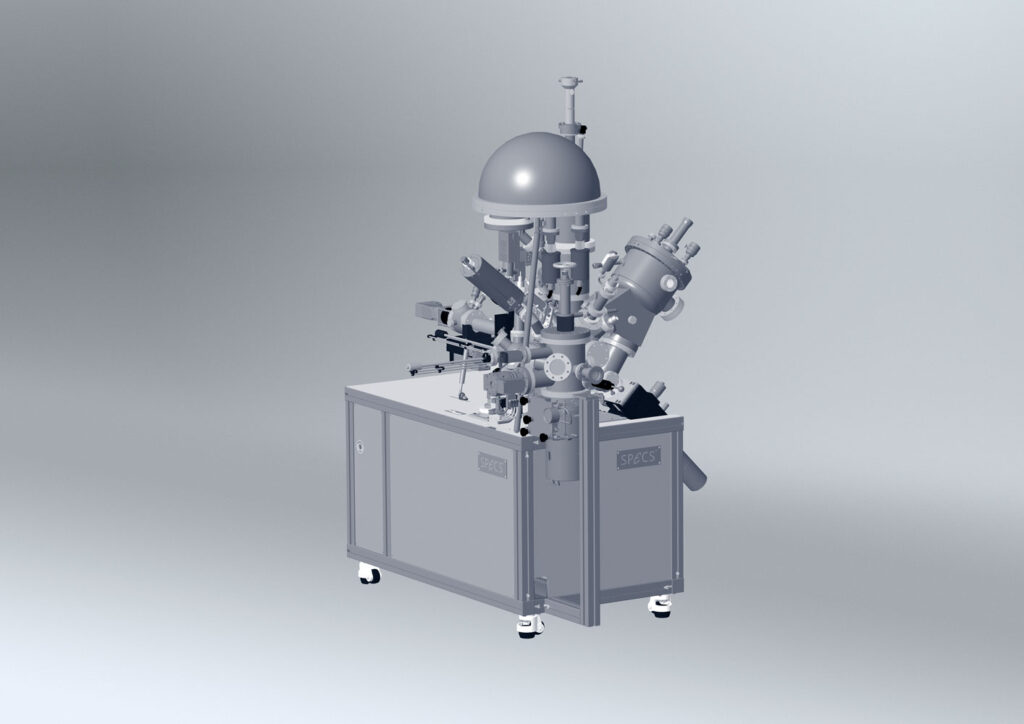
The ProvenX-PS system is a dedicated XPS/UPS system, equipped with PHOIBOS 150 electron analyser with ultra-fast 128 channel delay-line detector with snapshot capability, FOCUS 500 dual anode monochromated X-ray source and optional UVS 10 high-flux UV source. The system comes with a clean UHV sample storage facility and a multi sample fast entry loadlock and can be additionally equipped with a dedicated preparation chamber as well as HPC 20 high pressure cell.

The Nanonis Tramea™ base configuration provides all elements required for performing high-speed DC transport measurements: 8 precision, high-speed DC sources, 8 precision analog inputs, and a full-featured software solution for data generation and acquisition. All signal conditioning, FPGA and real-time signal processing are also included in the base configuration, which offers a complete framework that can be adapted and extended with a wide range of add-on modules.

Base configuration: Real-time Controller, Signal Conversion unit and Nanonis software.

When the number of sample contacts becomes very large, or when external instruments deliver many signals to be digitised, 8 input and output channels might simply not be enough. One additional TSC instantaneously doubles that number to 16. For even more complex experiments, a maximum of 3 TSCs can be connected to the Nanonis Tramea™ base configuration, transforming the instrument into a 24 outputs and 24 inputs system. Never before has that number of signals been generated or acquired with similar performance.

Complex nanodevices require a large number of gate voltages, and this number is usually much larger than the number of signals to be digitized. While the 8 input channels of the Nanonis Tramea™ base configuration offer sufficient digitizing channels for most applications, 8 output channels might not cover all the requirements for sample driving voltages. One TSO instantaneously adds 16 high precision and low-noise 20-bit outputs to the Nanonis Tramea™ base configuration. For even more complex experiments, a maximum of 2 TSOs can be connected to the Nanonis Tramea™ base configuration, transforming the instrument into a 50 outputs and 8 inputs system. Never before has that number of signals been generated or acquired with similar performance.

The lock-in modules let you modulate and demodulate any of the input and output signals available with frequencies up to 40 kHz. Up to 8 lock-in modules can be used independently from each other or synchronised in a phase coherent manner when the generation of multiple frequencies is required. With the multi-frequency option a single module can demodulate up to 8 harmonics of the same signal or independent input signals.

The quantum dot simulator lets you explore the complete Nanonis Tramea™ measurement system as if it were connected to a real quantum dot. It simulates a typical single top-gate defined quantum dot, and includes the full feature set of the software. Possible measurements include single gate sweeps, left- vs. right-gate sweeps as well as stability diagrams. Lock-in operation allows differential conductance measurements.

For more information