Environmental (NAP) XPS
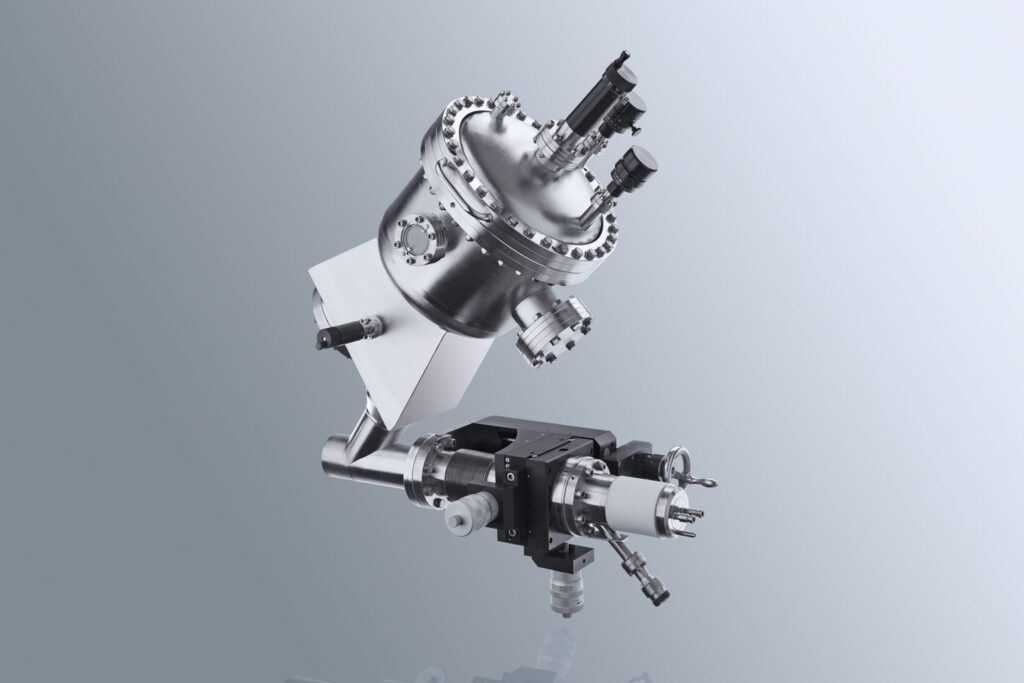
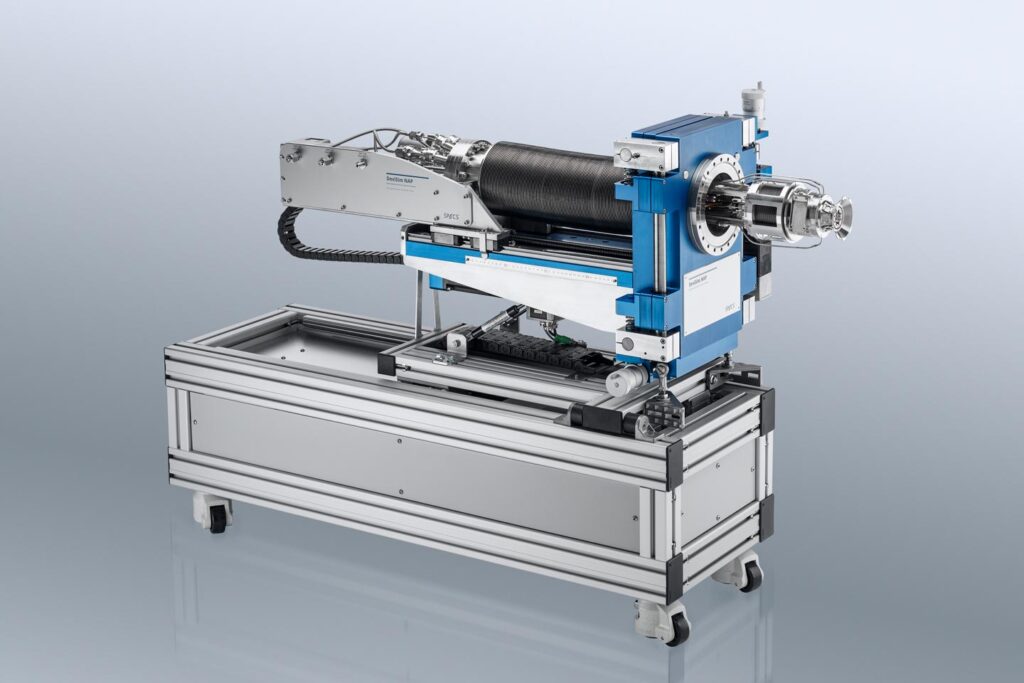
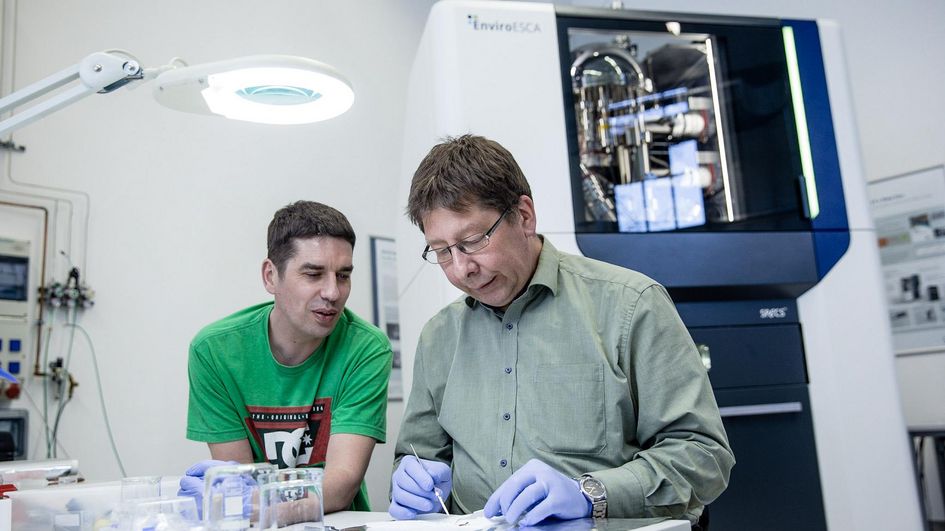
Historically X-Ray Photoelectron Spectroscopy (XPS) was a technique which had to be performed in high or ultra-high vacuum (<~10-7 mbar) due to the limited path length of the electrons emitted from the sample at higher pressures. As a result of advances in the technology commercialised by our partner, SPECS, it is now possible to measure samples at pressures much closer to atmospheric pressure (<100mbar). Analysis at such pressures without pumping the analysis chamber down to HV or UHV conditions first, opens up a much wider range of samples and applications for XPS than were possible in the past. Studies of samples such as liquids, liquid-solid interfaces and samples under a background of different gases become possible. Product development of the X-Ray source technology has also allowed the analysis that would have been performed at a synchrotron in the past to be successfully performed in the customer’s own laboratory. Operating in near-ambient conditions also makes analysis of electrically insulating samples such as plastics or ceramics much easier. Samples which would become electrically charged in conventional UHV XPS are self-neutralised under such conditions. SPECS has become the market leader in this technology and offers a variety of products including a fully automated, high throughput system, the EnviroESCA, as well as systems which offer a flexible approach including UHV analysis and integration of a wide range other UHV techniques.
For more information
Environmental (NAP) XPS
Historically X-Ray Photoelectron Spectroscopy (XPS) was a technique which had to be performed in high or ultra-high vacuum (<~10-7 mbar) due to the limited path length of the electrons emitted from the sample at higher pressures. As a result of advances in the technology commercialised by our partner, SPECS, it is now possible to measure samples at pressures much closer to atmospheric pressure (<100mbar). Analysis at such pressures without pumping the analysis chamber down to HV or UHV conditions first, opens up a much wider range of samples and applications for XPS than were possible in the past. Studies of samples such as liquids, liquid-solid interfaces and samples under a background of different gases become possible. Product development of the X-Ray source technology has also allowed the analysis that would have been performed at a synchrotron in the past to be successfully performed in the customer’s own laboratory. Operating in near-ambient conditions also makes analysis of electrically insulating samples such as plastics or ceramics much easier. Samples which would become electrically charged in conventional UHV XPS are self-neutralised under such conditions. SPECS has become the market leader in this technology and offers a variety of products including a fully automated, high throughput system, the EnviroESCA, as well as systems which offer a flexible approach including UHV analysis and integration of a wide range other UHV techniques.
Key Features
• Analysis of “real world” insulating and outgassing samples
• Flexibility of sample size
• Easy control of measurement conditions including temperature, pressure
• Introduction of gases and liquids to the measurement environment
Applications
Catalysis, Astrochemistry, Astrobiology, Archaeology, Food Science, Pharmaceuticals, Medical, Biomaterials, Cosmetics, Energy Storage, Materials, Devices, Electrochemistry, Soils, Minerals, Thin Films, Coatings, Polymers, Plastics, Corrosion, Microelectronics, Semiconductors
Environmental (NAP) XPS
Historically X-Ray Photoelectron Spectroscopy (XPS) was a technique which had to be performed in high or ultra-high vacuum (<~10-7 mbar) due to the limited path length of the electrons emitted from the sample at higher pressures. As a result of advances in the technology commercialised by our partner, SPECS, it is now possible to measure samples at pressures much closer to atmospheric pressure (<100mbar). Analysis at such pressures without pumping the analysis chamber down to HV or UHV conditions first, opens up a much wider range of samples and applications for XPS than were possible in the past. Studies of samples such as liquids, liquid-solid interfaces and samples under a background of different gases become possible. Product development of the X-Ray source technology has also allowed the analysis that would have been performed at a synchrotron in the past to be successfully performed in the customer’s own laboratory. Operating in near-ambient conditions also makes analysis of electrically insulating samples such as plastics or ceramics much easier. Samples which would become electrically charged in conventional UHV XPS are self-neutralised under such conditions. SPECS has become the market leader in this technology and offers a variety of products including a fully automated, high throughput system, the EnviroESCA, as well as systems which offer a flexible approach including UHV analysis and integration of a wide range other UHV techniques.
Key Features
• Analysis of “real world” insulating and outgassing samples
• Flexibility of sample size
• Easy control of measurement conditions including temperature, pressure
• Introduction of gases and liquids to the measurement environment
Applications
Catalysis, Astrochemistry, Astrobiology, Archaeology, Food Science, Pharmaceuticals, Medical, Biomaterials, Cosmetics, Energy Storage, Materials, Devices, Electrochemistry, Soils, Minerals, Thin Films, Coatings, Polymers, Plastics, Corrosion, Microelectronics, Semiconductors