Spectroscopy
VSM Instruments offers a variety of spectroscopy solutions to enable surface chemical analysis at a variety of spectral and spatial resolutions and to suit many different budget levels.
Surface sensitive spectroscopic methods, like Auger Electron Spectroscopy (AES), Low Energy Ion Scattering Spectroscopy (LEIS) and especially X-ray or UV excited Photoelectron Spectroscopy (XPS and UPS) have become powerful tools to characterise the surface chemical composition, the chemical state of the surface electrons and the electronic properties of materials surfaces.
Modern related methods can give insight into the surface chemical structure in 2 and 3 dimensions via surface imaging or imaging combined with depth-profiling. Mapping via XPS, or Laser Induced Breakdown spectroscopy, or surface chemical microscopy techniques such as Scanning Auger Microscopy (SAM) can give a complete chemical picture of the surface. The electronic and magnetic structure is also accessible via Angle Resolved or Spin Resolved Photoelectron Spectroscopy (ARPES or Spin-PES).
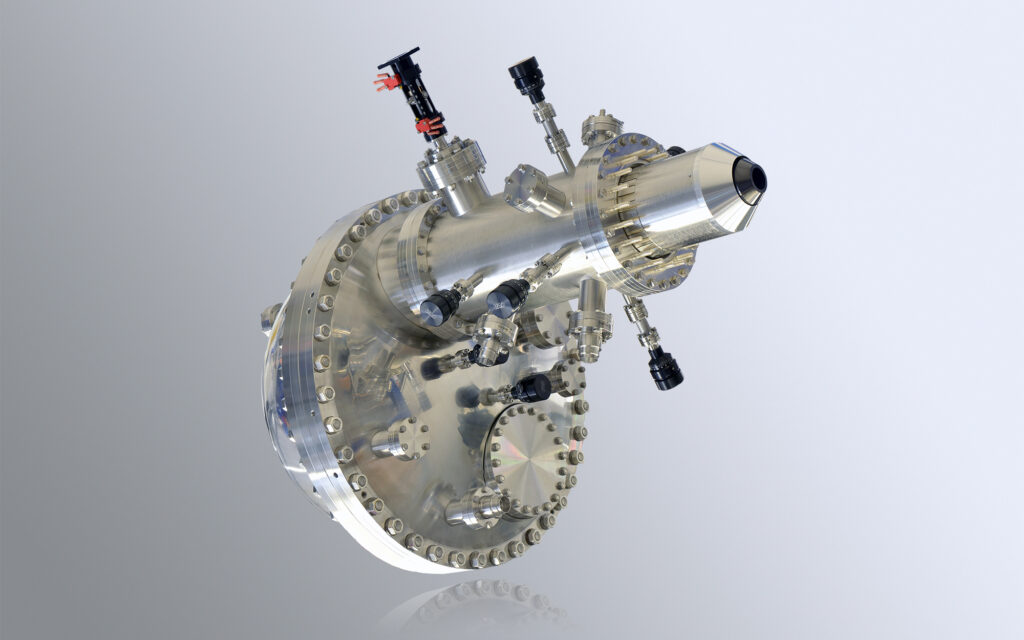
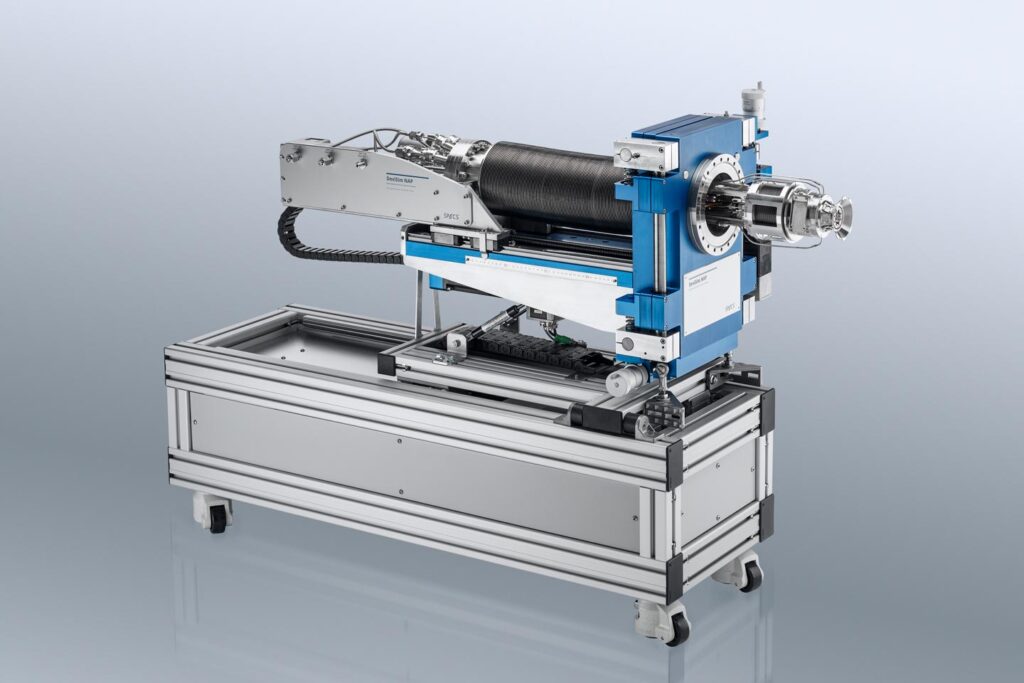
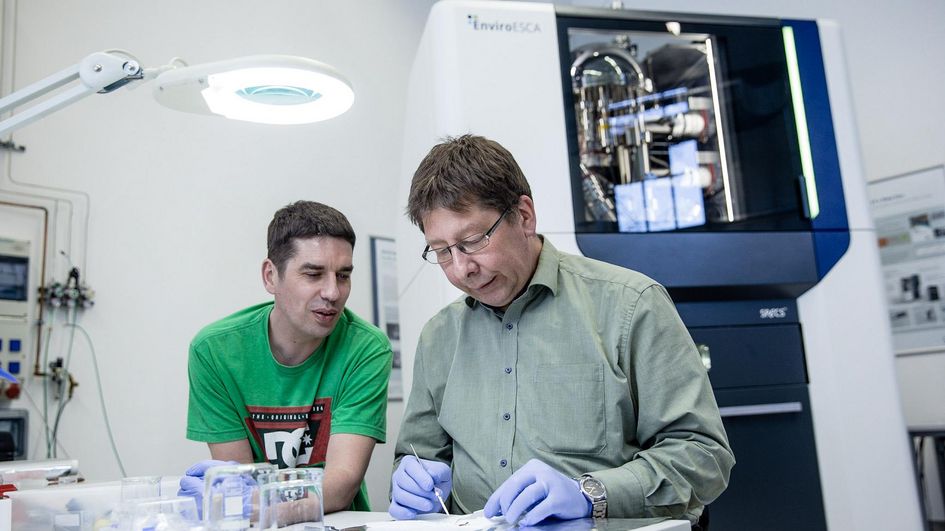
For several years it has also been possible to perform some of these spectroscopic methods also under environmental or Near Ambient Pressure (NAP) conditions, rather than in Ultrahigh Vacuum (UHV) to allow for operando characterisation of surface chemical reactions or the characterisation of liquids or gases and their interfaces to solids.

For more information
Spectroscopy
VSM Instruments offers a variety of spectroscopy solutions to enable surface chemical analysis at a variety of spectral and spatial resolutions and to suit many different budget levels.
Surface sensitive spectroscopic methods, like Auger Electron Spectroscopy (AES), Low Energy Ion Scattering Spectroscopy (LEIS) and especially X-ray or UV excited Photoelectron Spectroscopy (XPS and UPS) have become powerful tools to characterise the surface chemical composition, the chemical state of the surface electrons and the electronic properties of materials surfaces.
Modern related methods can give insight into the surface chemical structure in 2 and 3 dimensions via surface imaging or imaging combined with depth-profiling. Mapping via XPS, or Laser Induced Breakdown spectroscopy, or surface chemical microscopy techniques such as Scanning Auger Microscopy (SAM) can give a complete chemical picture of the surface. The electronic and magnetic structure is also accessible via Angle Resolved or Spin Resolved Photoelectron Spectroscopy (ARPES or Spin-PES).
For several years it has also been possible to perform some of these spectroscopic methods also under environmental or Near Ambient Pressure (NAP) conditions, rather than in Ultrahigh Vacuum (UHV) to allow for operando characterisation of surface chemical reactions or the characterisation of liquids or gases and their interfaces to solids.
Key Features
- Wide range of spectroscopic surface analytical techniques from leading suppliers
- Contact us to discuss your application



Spectroscopy
VSM Instruments offers a variety of spectroscopy solutions to enable surface chemical analysis at a variety of spectral and spatial resolutions and to suit many different budget levels.
Surface sensitive spectroscopic methods, like Auger Electron Spectroscopy (AES), Low Energy Ion Scattering Spectroscopy (LEIS) and especially X-ray or UV excited Photoelectron Spectroscopy (XPS and UPS) have become powerful tools to characterise the surface chemical composition, the chemical state of the surface electrons and the electronic properties of materials surfaces.
Modern related methods can give insight into the surface chemical structure in 2 and 3 dimensions via surface imaging or imaging combined with depth-profiling. Mapping via XPS, or Laser Induced Breakdown spectroscopy, or surface chemical microscopy techniques such as Scanning Auger Microscopy (SAM) can give a complete chemical picture of the surface. The electronic and magnetic structure is also accessible via Angle Resolved or Spin Resolved Photoelectron Spectroscopy (ARPES or Spin-PES).
For several years it has also been possible to perform some of these spectroscopic methods also under environmental or Near Ambient Pressure (NAP) conditions, rather than in Ultrahigh Vacuum (UHV) to allow for operando characterisation of surface chemical reactions or the characterisation of liquids or gases and their interfaces to solids.
Key Features
- Wide range of spectroscopic surface analytical techniques from leading suppliers
- Contact us to discuss your application